

 Address:
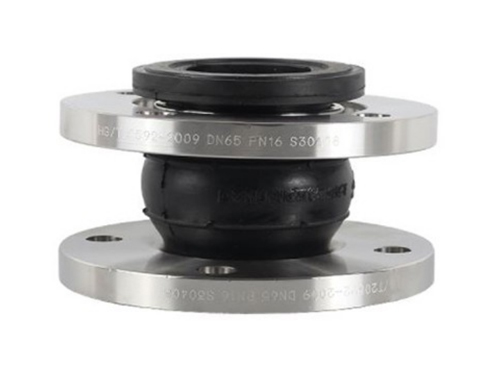
Stainless steel rubber flexible joint
Describe: The flange of stainless steel rubber flexible joint is made of stainless steel material. Stainless steel rubber flexible joint, also known as flange type rubber flexible joint, comm...
Click: 64

The flange of stainless steel rubber flexible joint is made of stainless steel material. Stainless steel rubber flexible joint, also known as flange type rubber flexible joint, commonly known as flexible rubber joint, is a hollow rubber product used for flexible connection between metal pipes in the installation and construction of fluid pipelines in Ningbo, Zhejiang. The material includes rubber, butyl rubber, styrene butadiene rubber, etc. The rubber flexible joint products are widely used in water, electricity, chemical industry and ship mooring systems. The main performance is high pressure resistance, good elasticity (axial and transverse angular displacement), noise reduction, light weight, vibration reduction, convenient installation, flexible use, easy replacement and maintenance, and acid, alkali and oil resistance
Function of stainless steel rubber flexible joint
Rubber flexible joint is a tubular rubber component composed of inner and outer layers of rubber, curtain layer, and steel wire ring, which is vulcanized and then combined with metal flange or parallel joint loose sleeve.
. This product can reduce vibration and noise, and compensate for thermal expansion and contraction caused by temperature changes. It is widely used in various pipeline systems. Connections with pumps and valves, fire-fighting equipment, pipelines with high vibration, and pipelines with frequent changes in temperature. Mainly used for the lifting and transportation of raw water and sewage, water supply and cooling circulating water for thermal power plants, pipeline transportation of chemical substances in the metallurgical industry, condensate water, chemical industry, cooling and dilution in the petrochemical industry, and flexible connections between long and short distance pipelines in other industries. Due to its high performance, rubber is also suitable for low-temperature transportation of granular, powdered, and gaseous materials in various industriesIntroduction to Stainless Steel Rubber Flexible Joints
Flexible single ball rubber flexible joints, also known as rubber tube flexible joints, flexible rubber joints, rubber flexible joints, bendable rubber joints, high-pressure rubber joints, rubber shock absorbers, compensators, etc. According to the connection method, there are three types: loose flange type, fixed flange type, and threaded type; According to structure, it can be divided into five types: single sphere, double sphere, reducing body, eccentric reducing body, curved sphere, and fan coil unit. The tubular rubber component is composed of inner and outer layers of rubber, curtain layers, and steel wire rings, which are vulcanized and then combined with metal flanges or parallel joints to form a loose sleeve. This product can reduce vibration and noise, and compensate for thermal expansion and contraction caused by temperature changes. It is widely used in various pipeline systems. This product is resistant to natural weather changes and can automatically extend during use. The structural material adopts impregnated nylon curtain fabric, and the inner and outer surfaces are made of relatively aged polar rubber materials. To prevent natural shrinkage and reduce aging and cracking of the product during long-term use, mesh steel wire is used for multi-body protection
(1) Rubber soft joint material: 1. Rubber (NR) 2. Styrene butadiene rubber (iso R) 3. Chloroprene rubber (CR) 4. Butyl rubber (IIR) 5. Nitrile rubber (NBR) 6. Ethylene propylene rubber (EPMEPDM) 7. Silicone rubber (Q) 8. Fluororubber (FPM)
(2) Stainless steel rubber soft joint metal flange material: 304, 304L, 316, 316L, ASTM A403, 1Cr18Ni9Ti, 0Cr18Ni9, 00Cr19Ni10, 00Cr17Ni14Mo2, etc.
(III) Soft joint standards: GB/T26121-2010, GB/T12777-2008