




 Address:
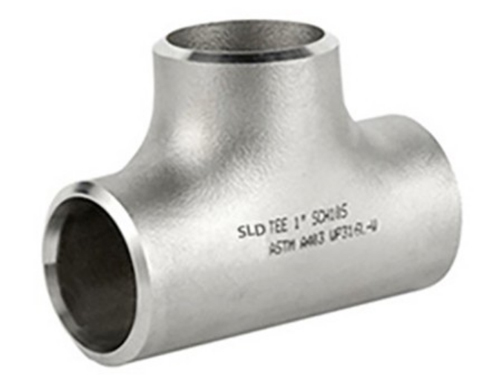
Equal diameter tee
Describe: Three way fittings, also known as pipe fittings or three-way fittings, three-way joints, etc. Equal diameter tee is a type of pipe fitting mainly used to change the direction of flu...
Click: 64

Equal diameter tees belong to a type of pipe fitting, also known as pipe fittings tees or three-way fittings, three-way joints, etc. The three-way valve is mainly used to change the direction of the fluid and is used at the branching point of the main pipeline. There are three types of tees: TS equal diameter tees and TR reducing tees. The equal diameter tees have the same main and branch pipe diameters, while the reducing tees have branch pipe diameters smaller than the main pipe diameter. According to the form of branch pipes, tees are divided into regular tees and diagonal tees. Regular tees are tee fittings where the branch pipe is perpendicular to the main pipe, while tees are tee fittings where the branch pipe has a certain angle with the main pipe. According to the processing technology, tees can be divided into seamless tees (refer to GB/T12459-2017) and board tees (refer to GB/T13401-2017). Three way fittings are used in places where pipelines have branches, and are widely used in chemical, civil construction, machinery manufacturing, shipbuilding industries, etc. due to their convenience and simplicity of use
Equal diameter tees are divided into carbon steel and stainless steel based on their materials; Carbon steel: (20 #, A3, Q235, Q23 excellent, Q235B, 20G, 16Mn, Q345, Q345R, ASTM A234WPB, ASTM A105, etc.); Stainless steel: (304, 304L, 316, 316L, S30408, S30403, S31608, S31603, SUS304, ASTM A403, TP321, TP317L, 347, 0Cr18Ni9, 00Cr19Ni10, 00Cr17Ni14Mo2, 1Cr18Ni9Ti, 06Cr17Ni12Mo2, 022Cr17Ni12Mo2, etc.)Common execution standards for equal diameter three:
Standards: GB/T12459-2017, GB/T13401-2017
American standards: ASME B16.9, ASME B16.28, ANSI B16.11
Petrochemical standards: SH/T3408-2012, SH/T3409-1996
Ministry of Chemical Industry standards: HG/T21635-1987
Power industry standards: DL/T695-2014
Petroleum natural growth gas industry standards: SY/T0510-2017
German standard DIN: DIN2615